CIVIL LIBERTIES UNDER ATTACK IN CORPUS CHRISTI
The push to place ICE agents in domestic airports isn’t just an immigration issue. It’s a threat to the constitutional rights of every American — and the Corpus Christi community would feel it first.
There is a moment at the airport that most Americans take for granted: the walk from your gate to baggage claim, ID back in your pocket, moving freely through your own country. No papers. No checkpoints. No questions about where you were born or who you are.
That moment may soon look very different.
As the Trump administration expands the reach of Immigration and Customs Enforcement across American life — into schools, churches, courthouses, and now airports — it is worth asking plainly: what actually happens when ICE is given a permanent presence at domestic airports? And what does that mean for a community like ours in the Coastal Bend, where Latino families, immigrant workers, and mixed-status households are not abstractions — they are our neighbors, our coworkers, and the backbone of our regional economy?
Your Right to Travel Freely — Gone
The United States has never had internal immigration checkpoints at domestic airports. When you fly from Corpus Christi to Houston, or from San Antonio to Dallas, you need a government-issued ID — but not proof of citizenship. That distinction matters enormously.
Placing ICE agents at airports for interior enforcement — not international customs, but domestic terminals — would effectively create immigration checkpoints inside the country for the first time in American history. Every passenger becomes a potential subject. The presumption of innocence, and the presumption of belonging, gets reversed.
The freedom to move within your own country without government interference is a foundational American right, recognized by courts for generations. It does not require you to prove who you are to a federal agent at a gate. ICE in airports changes that — for everyone.
“This isn’t just an immigration issue. When the government can stop any American at an airport and demand they prove their right to travel, that affects all of us.”
What It Means for Travelers
The immediate effects would ripple across every category of traveler:
• U.S. citizens could be stopped and questioned about their citizenship status based on appearance alone — with no probable cause required in the moment. Citizens who don’t carry extra documents, or who “look foreign” to an agent’s eye, could face detention, even temporarily.
• Green card holders and legal visa holders could face enhanced scrutiny, lengthy interrogation, or detention if their paperwork has any technical discrepancy — even one they are unaware of.
• DACA recipients with valid work authorization could be aggressively questioned or detained based solely on appearance, regardless of their legal standing.
• Mixed-status families face the most acute danger. A U.S. citizen child flying with an undocumented parent could be separated at the gate. A grandmother visiting on a tourist visa could be pulled aside while her American grandchildren watch.
• Racial profiling becomes institutionalized. Brown, Black, and immigrant-presenting travelers would face a fundamentally different airport experience. This is not hypothetical — it is the documented pattern of immigration enforcement in every other setting where it has been deployed.
• A chilling effect on travel. Immigrant families, mixed-status households, and communities of color may avoid flying altogether — even if they have every legal right — because the risk feels too great. Fear is itself a form of enforcement.
What It Means for Corpus Christi
This is not an abstract policy debate for the Coastal Bend. Corpus Christi is a majority-Latino, border-adjacent city with deep immigrant roots. ICE presence at Corpus Christi International Airport would have immediate, concrete consequences for our community:
• Refinery and Port workers who form the backbone of our regional energy economy — many of whom are immigrants or have immigrant family members — could be deterred from flying for work or to visit family, affecting our already-strained economic situation.
• Medical travel would be threatened. Many Coastal Bend residents fly to Houston or San Antonio for specialized medical care. Fear of airport enforcement could cause people to delay or avoid critical medical treatment — a life-or-death consequence.
• Tourism and business travel could decline as visitors to our majority-Latino region fear harassment. The Coastal Bend economy depends on people feeling welcome here.
• Military families at NAS Corpus Christi could be caught in the crossfire if service members’ family members have complicated immigration status — a reality for many military households.
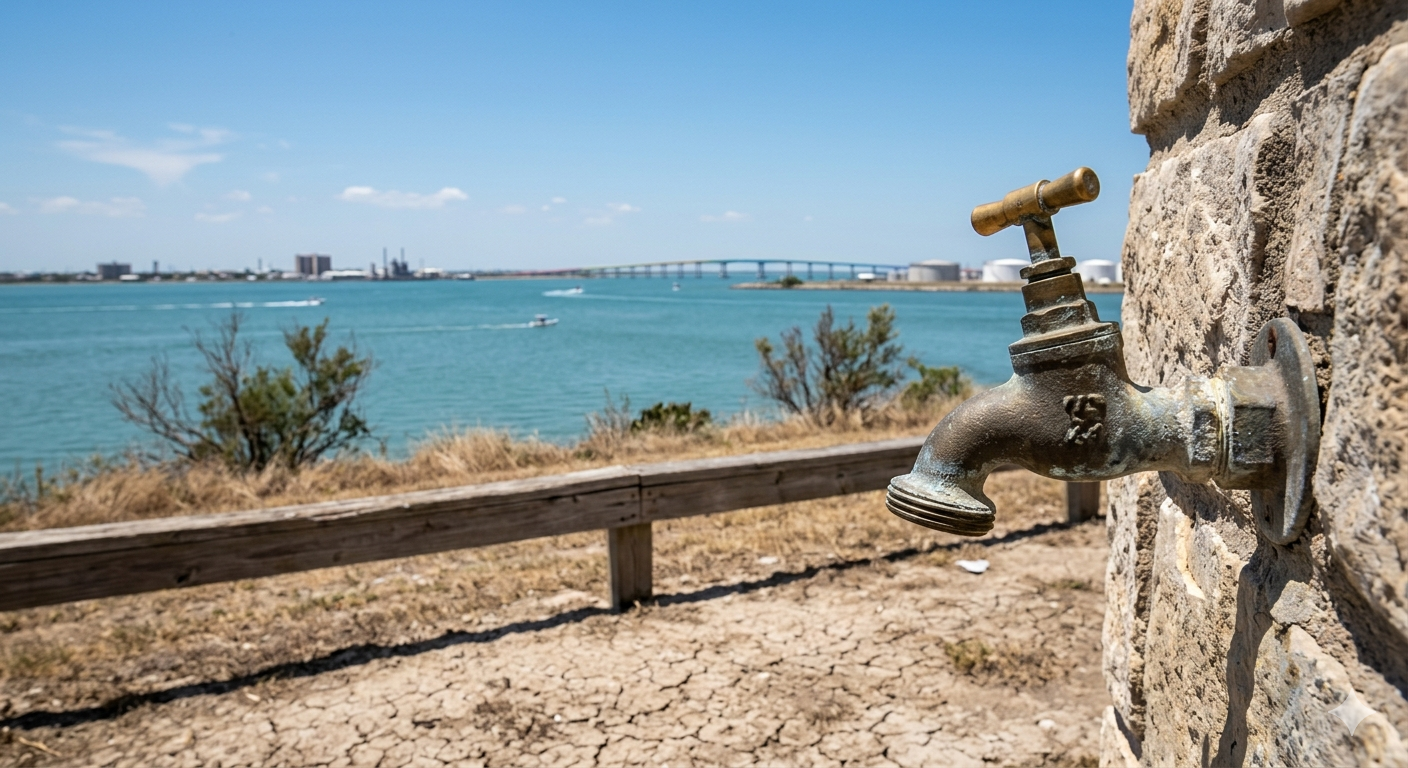
• The water crisis makes this worse. Our community is already under extraordinary stress from one of the worst droughts in our history. Adding fear and instability to daily life — including something as routine as flying — piles pressure on families already struggling.
The Constitutional Stakes
The legal concerns here are serious and well-documented:
• The Fourth Amendment protects Americans against unreasonable search and seizure. ICE stops without probable cause at domestic airports would face immediate legal challenge — but that doesn’t help the person detained in the moment while their flight departs.
• The right to travel freely within the United States has been recognized by courts as a fundamental constitutional right. Internal immigration checkpoints directly threaten that right in a way that has no precedent in American domestic law.
• Due process protections are at risk when citizens or legal residents are detained without cause. Quick detentions — even those later found to be unlawful — can cost people jobs, family events, medical appointments, and dignity.
• The border exception to Fourth Amendment protections currently applies at international ports of entry. Extending that legal logic to domestic airports would be one of the most dramatic expansions of federal search power in modern American history.
History lesson: Post-9/11 showed us that once checkpoint infrastructure is built, it expands. Countries that use internal immigration checkpoints routinely use them as tools of social control far beyond their original stated purpose.
This Affects Everyone — Not Just Immigrants
It is tempting to think of immigration enforcement as something that only affects undocumented people. That is not how it works in practice.
When ICE operates inside domestic airports, every passenger becomes a potential subject of enforcement. The agent doesn’t know your status before approaching you. The stop comes first. The questions come second. Your documentation — or your face, or your accent, or your name — determines what happens next.
This affects white citizens who travel with immigrant spouses. Veterans whose children have complicated immigration status. Business travelers who happen to have Latin American surnames. Elderly grandparents visiting from Mexico on legal visas. Teachers, nurses, and refinery workers who have every right to be exactly where they are.
The question is not whether you have “something to hide.” The question is whether the government has the right to make you prove that you belong in your own country every time you try to catch a flight.
What You Can Do
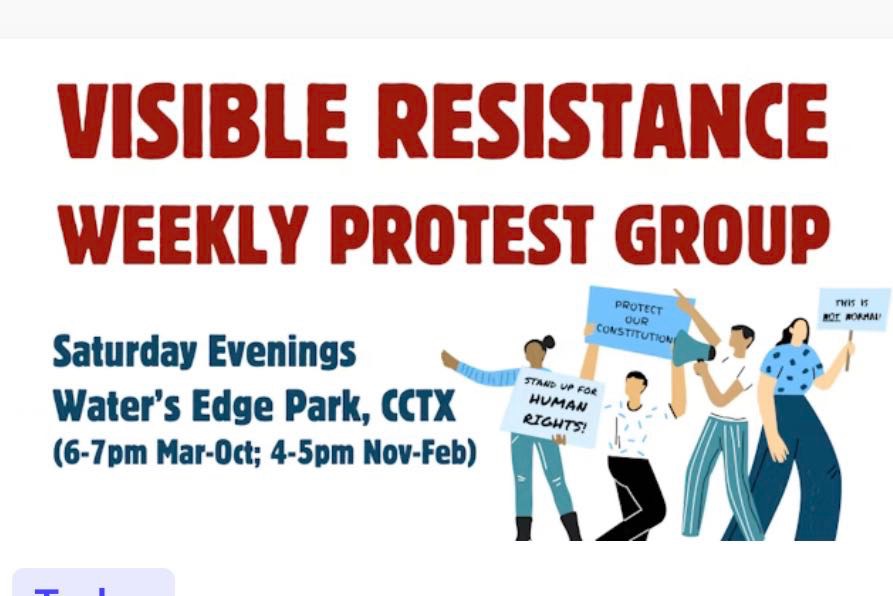
The No Kings Rally on Saturday, March 28 from 2–4 PM in Corpus Christi is one place to start. Show up, stand with your neighbors, and make clear that the Coastal Bend will not quietly accept the erosion of constitutional rights — for anyone.
Beyond that, know your rights. The ACLU has free resources and trainings on what to do if you are stopped by ICE. Share them with your community. Talk to your neighbors. Come to our Monday morning coffee at the Island Starbucks and connect with others who are paying attention and fighting back.
In this country, we do not have kings. And we do not have checkpoints at our domestic airports. Not yet. The question is whether we intend to keep it that way.
Know Your Rights
• ACLU Know Your Rights — ICE Enforcement: aclu.org/know-your-rights/immigrants-rights
• No Kings Rally — Find Your Event: nokings.org
• Indivisible Coastal Bend: indivisible.org/groups
• Island Democrats: islanddemocrats.com