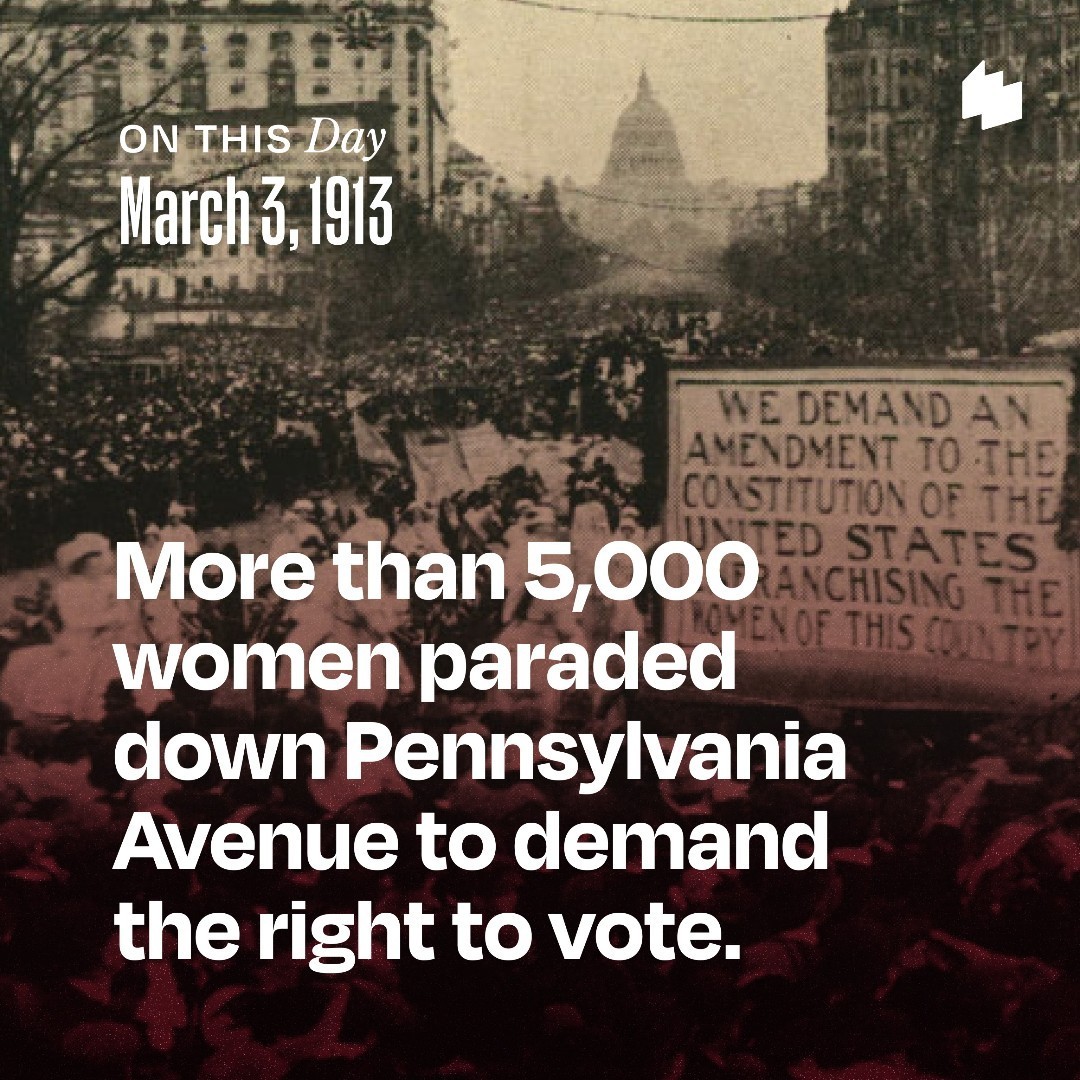
On This Day in 1913, more than 5,000 women marched down Pennsylvania Avenue in D.C. to demand the right to vote, marking the first suffrage parade and the first large, organized march on Washington for political purposes. The 1913 Woman Suffrage Procession through Washington, D.C. changed the way protests were viewed and carried out by the American public, and laid the foundation for future marches.
The Procession, unprecedented in both its scale and its tactics, was a major turning point for the woman suffrage movement in the United States. Suffrage leader Alice Paul, who was recently elected head of the National American Woman Suffrage Association’s Congressional Committee, devised the idea for a large-scale public demonstration. Paul, who had spent time in England, witnessed the more militant tactics that the British suffragists used to draw attention to their cause.
Parade organizers strategically selected March 3, 1913 for the march. Woodrow Wilson was to be inaugurated as the new President the following day, and national press was in town and idly awaiting the inaugural festivities.
Paul insisted that the parade march down Pennsylvania Avenue, deliberately following the same route that the inaugural parade would take the next day. The contrast between the two parades would prove striking. Reporters flocked to the suffrage parade, leaving Wilson to arrive at the train station unheralded.
Women from all over the United States and abroad traveled to D.C. to participate in the march. Paul, working with Mary Church Terrell, allowed Black women to participate, but they had to march in the back of the parade. Prominent civil rights activist and suffragist, Ida B. Wells-Barnett, didn’t agree with the decision. While she started in the back, she ran to the front once the parade began to join the women in her state’s delegation.
Despite the chaos and violence that initially ensued during the parade, Paul declared the event a success. The parade made national headlines and once again captured the public’s interest in the suffrage movement. Even those who opposed votes for women acknowledged that, as citizens, the women had the right to peacefully assemble.