Hemp Banned, Food Stamps Restricted
Two sweeping policy changes hit Texas this week — one shuttering hemp shops across the state, the other restricting what millions of Texans can buy with food stamp benefits. Here’s everything you need to know.
Smokable Hemp Is Now Illegal in Texas
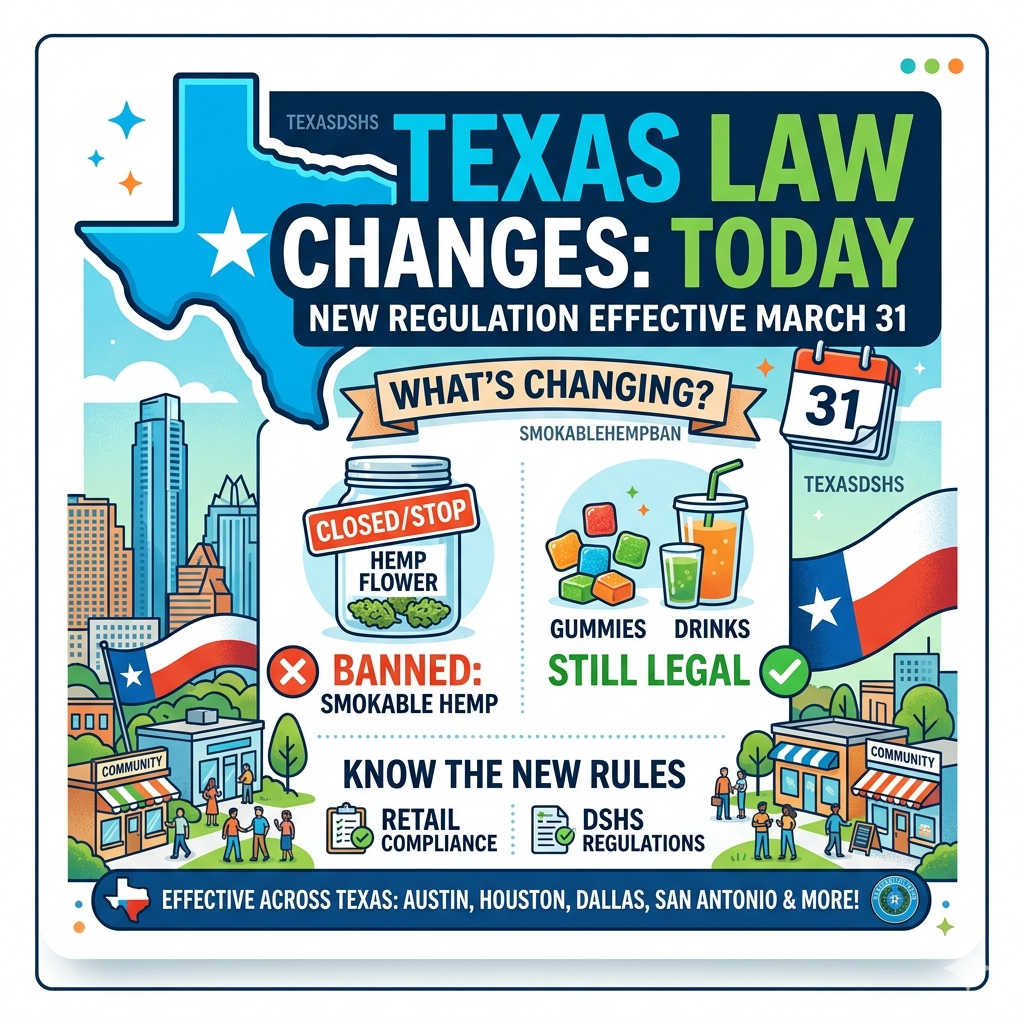
Effective today, March 31, Texas has banned the sale of smokable hemp products — including THCA flower, pre-rolled joints, and high-THC concentrates — under sweeping new regulations from the Texas Department of State Health Services.
The rules don’t technically ban hemp outright. Instead, they change how THC is measured. Previously, a product was legal if it contained less than 0.3% Delta-9 THC by dry weight. Now, lab tests must account for total THC — including THCA, a compound that only becomes psychoactive when heated or smoked. Because most hemp flower is naturally high in THCA, this measurement change effectively makes it illegal.
“If the state wanted to derail people from staying in business, well, they’re achieving their objective.”
— Hemp retailer, Dallas areaHow We Got Here
Texas lawmakers legalized hemp in 2019, inadvertently opening the door for a multi-billion dollar market selling products that produced a legal high. By 2025, the Legislature was deeply divided — the Senate passed a full ban on hemp-derived THC products, but Gov. Greg Abbott vetoed it. After two failed special sessions, Abbott directed state agencies to craft regulations instead.
Those rules, issued by DSHS in early 2026, created the framework taking effect today. Critics say it’s a back-door ban; supporters say it closes a loophole that enabled a recreational drug market without voter approval.
What’s banned vs. what’s still legal
- ✕ THCA flower and pre-rolled joints
- ✕ High-THC concentrates exceeding 0.3% total THC
- ✕ THC vape pens (banned Sept. 1, 2025)
- ✓ Hemp edibles (gummies, capsules) — still legal with new packaging rules
- ✓ Hemp beverages — regulated by TABC, not banned
- ✓ CBD products below the THC threshold
- ✓ Possession — the rules only affect manufacture and sale, not personal possession
Industry advocates say the change will push consumers toward the illegal market. A lawsuit challenging the regulations is expected imminently. The Texas Supreme Court is also expected to hear a related challenge on Delta-8 THC this year.
SNAP Recipients Can No Longer Buy Candy or Sugary Drinks
Starting Wednesday, April 1, Texans who receive Supplemental Nutrition Assistance Program (SNAP) benefits — commonly called food stamps — will no longer be able to use their Lone Star Cards to purchase candy or sweetened beverages.
The change stems from Senate Bill 379, passed during the 89th Texas Legislature as part of the state’s “Make America Healthy Again” initiative. Texas also secured a federal waiver from the USDA to implement the restrictions, making it a Texas-specific rule rather than a national mandate.
“Texas is leading the way in aligning SNAP benefits with healthier food options.”
— Gov. Greg AbbottExactly What’s Restricted
The rules can be tricky. Here’s the breakdown:
Restricted items (no longer purchasable with SNAP)
- ✕ Soda and sugary drinks with 5+ grams of added sugar per serving
- ✕ Diet drinks and beverages with any artificial sweetener
- ✕ Candy bars, gum, taffy, sour candy
- ✕ Nuts, fruit, or raisins coated with chocolate, yogurt, or caramel
- ✓ Chocolate milk and dairy-based drinks (still allowed)
- ✓ Plant-based milks like soy or oat milk (still allowed)
- ✓ 100% juice drinks with more than 50% fruit or vegetable content
- ✓ Baking chocolate and chocolate chips (still allowed)
- ✓ Meat, produce, dairy, bread, and pantry staples (all unaffected)
What Happens at Checkout?
Retailers are responsible for enforcement at the point of sale. Grocery store systems will be updated to flag restricted items. Importantly, SNAP recipients who accidentally purchase a restricted item will not lose their benefits — the new rules are not punitive toward consumers.
About 3.5 million Texans — including 1.7 million children — receive SNAP benefits each month. Critics of the restrictions, including anti-hunger advocates, worry that the policy doesn’t make healthy food more affordable, only restricts access to certain products.